
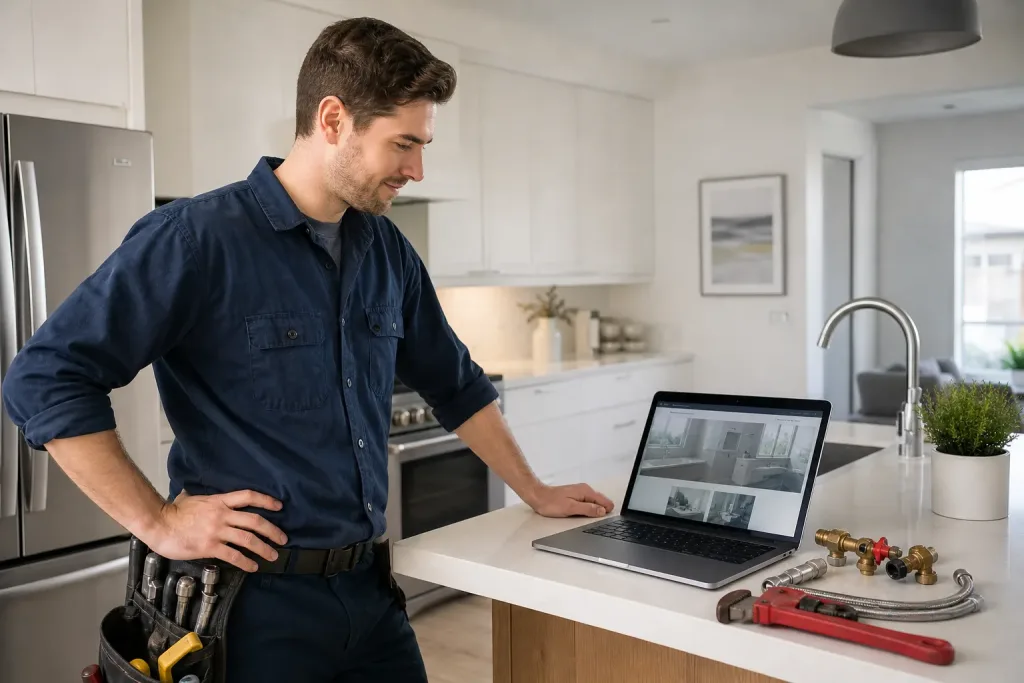
Quick answer: Good plumbing website design makes it easy for a homeowner to see what you do, where you work and how to reach you within seconds. For Toronto plumbers, that means clear service pages, a visible phone number, proof of your work and content that search engines and AI assistants can understand.
Key points
- Visitors with a leaking pipe want your phone number fast, so put it everywhere.
- Separate pages for each service and neighbourhood help people and search engines.
- Photos, reviews you have earned and clear details build trust.
- AI assistants favour sites that state who you serve and what you do plainly.
- A mobile-first layout matters because many plumbing searches happen on a phone.
What makes plumbing website design different?
Most people do not browse for a plumber. They search because something is wrong: a burst pipe, a backed-up drain, a water heater that has stopped working. That changes how a website should be built. Plumbing website design has to serve a stressed visitor who wants to know three things quickly: can you help, do you work in my area, and how do I reach you?
In Toronto, where many homes are older and basements often hold the plumbing, urgent calls are common, especially after heavy rain or a cold snap. A visitor in that situation will not read a long story about your company. They will glance at the top of the page, look for a phone number and decide.
That is why the best plumbing sites feel simple. They load quickly, read well on a phone, and put the most useful information first. Everything else, including your story and your project photos, supports that first quick decision.
What should a plumber's website include?
A strong site does not need to be large, but it should cover the basics well. Here is a practical checklist:
- A visible phone number at the top of every page, tappable on mobile.
- Clear service pages, such as drain cleaning, water heaters, fixtures, and repairs, each with its own page.
- Service area details naming Toronto and the neighbourhoods you actually work in.
- Real photos of your work and team, not generic stock images.
- Proof of trust, such as licences and insurance you hold, and reviews you have genuinely earned.
- A simple contact form with only the fields you need.
- Answers to common questions, like what to do while waiting for a plumber.
Only list credentials you truly hold. Requirements for plumbing work vary by trade and by municipality, so check what applies to your business before publishing anything about licensing.
How do you get found by Toronto homeowners?
A good-looking site still needs to be found. Search engines look for pages that match what people type, so a single page that lists every service tends to underperform. Give each major service its own page and describe it in plain words, the way a customer would.
Local detail helps too. Toronto is a big city with distinct areas, and homeowners often search with a neighbourhood or nearby area in mind. If you serve parts of Toronto, say so clearly rather than leaving visitors to guess. Mention the kinds of homes you see, such as older detached houses, semis and condos, and the jobs that come with them.
Keep your business name, address and phone number consistent everywhere they appear online, including your Google Business Profile. Small mismatches confuse both customers and search engines. Then keep adding useful content, such as short guides on frozen pipes in winter or what to check before calling for a drain problem.
Does AI search change plumbing website design?
More people now ask AI assistants for recommendations instead of scrolling through search results. These tools pull from websites that explain clearly who a business is, what it does and where it works. Vague pages with slogans give them little to use.
For a plumber, that means writing in direct statements: the services you offer, the areas you serve, and answers to the questions customers ask most. A short FAQ on each service page is a simple way to do this. Clear headings and plain language help both readers and AI tools understand your page.
We work on this at Spottable AI, helping trades and service businesses become easier to find and easier to choose. If you are curious how this applies to contractors, you can read about AI visibility for Canadian contractors or see the idea behind moving from searchable to selectable.
What should you look for in a web designer?
Whoever builds your site should ask about your business before they ask about colours. A good partner will want to know your main services, the areas you serve, and what kinds of customers you want more of.
- Mobile first: ask to see how pages look and load on a phone.
- Search basics built in: page titles, headings and local details should be part of the build, not an add-on.
- Easy updates: you should be able to change a phone number or add a photo without a long wait.
- Clear ownership: know who owns your domain and content.
- Realistic expectations: a new site takes time to build trust with search engines, so be wary of overnight promises.
Cost depends on the number of pages, the features you need and how much content has to be written, so a conversation about your goals gives you a far more useful number than a general range. If you would like to talk through a plumbing website for your Toronto business, get in touch and we will happily share ideas.
Frequently asked questions
How many pages does a plumbing website need?
There is no fixed number, but a sensible starting point is a home page, one page for each main service, a service area page, an about page and a contact page. Add more as you grow, such as pages for specific neighbourhoods or common problems you solve.
Should I show my phone number or use a contact form?
Use both. People with urgent problems usually want to call, so a tappable phone number should be easy to see on every page. A short form suits customers planning a bigger job who prefer to write when it is convenient.
How long before a new website brings in calls?
It varies. Some calls may come from people who already know you or find your Google Business Profile. Ranking in search results usually builds gradually as your pages are indexed and earn trust, so think in months rather than days.
Do I need a blog on a plumbing website?
It is not required, but helpful articles can answer questions customers already have, like dealing with frozen pipes in a Toronto winter. They give search engines and AI assistants more clear information about your expertise. A few useful posts beat many thin ones.
How often should I update my plumbing website?
Review it a few times a year. Check that your phone number, hours and service areas are correct, add recent project photos, and refresh any seasonal advice. Regular small updates are more useful than a rebuild every few years.